Tuesday, June 8, 2010

Labor

Because there are so many people in China, human labor is definitely affordable. There are far more people than jobs available and many are willing to do whatever it takes to earn a scant amount of money. Therefore, anything “made in China” is usually extremely cheap and most of the money goes to material and transportation costs rather than labor costs. I think this is usually true for most developing countries.

For example, my uncle hires two individual housekeepers. One only works part-time and is paid by the hour. She does not live with us. Her main chores include mopping the floors, cleaning, and doing laundry. I have not really interacted with her and it doesn’t appear that the other members of the household do either. She earns 12 Yuan or $2 an hour. I believe she also has to turnover some of this pay to the company that hires her.

The other housekeeper is more of a nanny. We called her Little Wang and I think she is in her fifties. She works here fulltime and actually has a little bed off the kitchen in small room that doubles as a laundry room. She takes cares of the little kids and does all the cooking and grocery shopping. She is paid 1800 Yuan a month plus room and board. That is about $10 a day.

Little Wang seems like a part of the family. We all converse with her and she is familiar with our habits and preferences. We try to convince her to eat with us at meals but she always insists on waiting until we are all done eating. The family treats her kindly, but at times with a little impatience because sometimes she is slow with chores. She loves to hear us talk about the United States.

Likewise, taxi drivers do not earn much either. Taking a taxi is actually pretty cheap in China. My grandmother and I rode a taxi for around twenty minutes and it cost 24 Yuan, or around $4. In New Haven this same trip might be $16 and tip. We talked with the driver for a little bit and he said in Shenzhen he is able to make more money than other cities, in the range of 5-6000 Yuan a month, or about $1000.

******

In other news, we visited a cheap shopping district yesterday. Since it was Sunday, there were so many people! For lunch we ate at a quick noodle place.


Yum!

So tonight I leave Shenzhen to travel to Changsha. I'm not sure if I'll have regular internet access but I will try to post as often as possible, so keep reading!


Saturday, June 5, 2010

Oddities of the Week

A tree appearing to support the building.

Interesting sign. "To keep the grass green, no stepping is the key."


And notice the dog.


Elevator signs that say 0, -1, and -2. I guess it makes sense that they wouldn’t write B, as they don’t say basement. The basement levels are the parking garages by the way. There is no room for parking anywhere on ground level. I think it is a pretty efficient use of space.


A packaged snack of chicken feet. It comes in many varieties and flavors. There are so many interesting snacks here, including dried squid and spicy packaged tofu. On the whole I think Chinese people prefer savory/salty snacks more than sweet ones, although at the nearby 7/11 I saw versions of Oreos and M&Ms.


Streetside haircuts! Talk about fast and convenient service.

Name of a high-end store in a mall.


Lost in translation...?


Luxury Goods

Though China has a low cost of living, there are certain goods and services here that only the wealthy can afford.


Currently, golf is only a sport for the upper-class. My uncle designs golf courses for a living and has his own company. He designed this golf training course. Golf lessons can cost around 600 Yuan an hour, which is about $100. Luckily my uncle can be my private instructor for free! We went to this training course on afternoon. We were able to relax and practice in the special VIP lounge.


Golf is much harder than it looks! I kept swinging and missing the ball but in the end I could actually hit the ball with the accurate position.


Another expensive service? Most "extracurricular" activities for young children such as piano and dance lessons. My aunt takes her two little kids to this educational playtime class. It is run by Gymboree and is located in a nice mall.

The classes supposedly teach toddlers motor skills and coordination. They cost 200 Yuan per child each class, which is more than $30.


This place is serious. There is a security guard that stands at the doorway. Then a lady came and pointed some sort of scanner at us (the same one as in this post) to make sure no one is sick. Then we had to take off our shoes, store them in cubbies and put on special socks.


The place slowly filled up with toddlers and babies accompanied by loving mothers or fathers. When the class started, only one parent was allowed in the room with the child and anyone else had to stand outside the classroom.


My little cousins both come here twice a week. I think they have a lot of fun!

Another item I've noticed to be costly is ice cream! This is such a pain for me because I love ice cream. When my friend and I went out one day, the ice cream we bought for dessert cost more than the meal we had just eaten for lunch. I ordered a big bowl of spicy noodles for only 12 yuan and the tiny scoop of ice cream was 15 yuan. It wasn't even a special brand.

Wednesday, June 2, 2010

Malls and Markets: The Modern and the Old

It is really interesting to compare these opposing elements in Chinese society. Shenzhen on the whole is a pretty modern city but it does contain aspects of traditional culture and habits.

The Modern

I decided to visit this really cheap shopping district in Shenzhen. It is located pretty far from my uncle’s neighborhood so my grandmother and I had to ride the subway.

The subway system in Shenzhen is very modern and pretty high tech. I bought a token from a machine and swiped it at the gate to get into the system. Since my grandmother is a senior citizen, she was able to ride for free. There is basically one main subway line so it was very easy to navigate. At the subway stop, flat screen TVs display the minutes until the arrival of the next train. Announcements are made in Mandarin, Cantonese, and English. The trains are extremely clean and there is no eating or drinking allowed. It took about fifteen minutes to travel seven stops. I dropped my token into the slot and was able to leave the system.

The Modern

We first got off at an earlier stop to meet my friend Kiki for lunch. Since she was on her lunch break from school, we decided to grab some fast food at a Japanese ramen place. We ordered noodles and sushi. Here is my grandmother with her seafood noodles!


Then we explored the mall complex above this stop. All the stores were extremely expensive and fancy, with brands such as Louie Vuitton, Coach, Fendi, among others. Most of the shops were western brands. There was also an ice rink and a movie theater. Though I was tempted to make purchases, I knew this brand-name items are probably cheaper in the states.


The Old

Finally we arrived at the cheap shopping district. It directly contrasted with the shiny new mall we had just seen. Little shops dotted crowded aisles. Each shop was a one-room-cubicle that had a miscellaneous assortment of clothing and a tiny curtain in the corner to act as a fitting room. The prices were definitely low – most articles of clothing were around 39 Yuan, or 6 dollars. There were also many opportunities to bargain, though I sadly lack expertise in this area.

*A few notes about salespeople in China * - They are extremely helpful, to the point of being suffocating. As soon as you walk in they will greet you and then follow you around as you look at the products. They will make suggestions, ask questions, encourage you to try on clothing, give advice, provide compliments and subtly brush through clothing to show-off their wares. Sometimes they will just look at you as you sort through items. This made me slightly uncomfortable as it is very different from the U.S. where you can just tell a salesperson that “I am just looking” and they will usually leave you alone. I definitely prefer just casually browsing and not being pressured. However, I know this is just the culture here.

The Modern

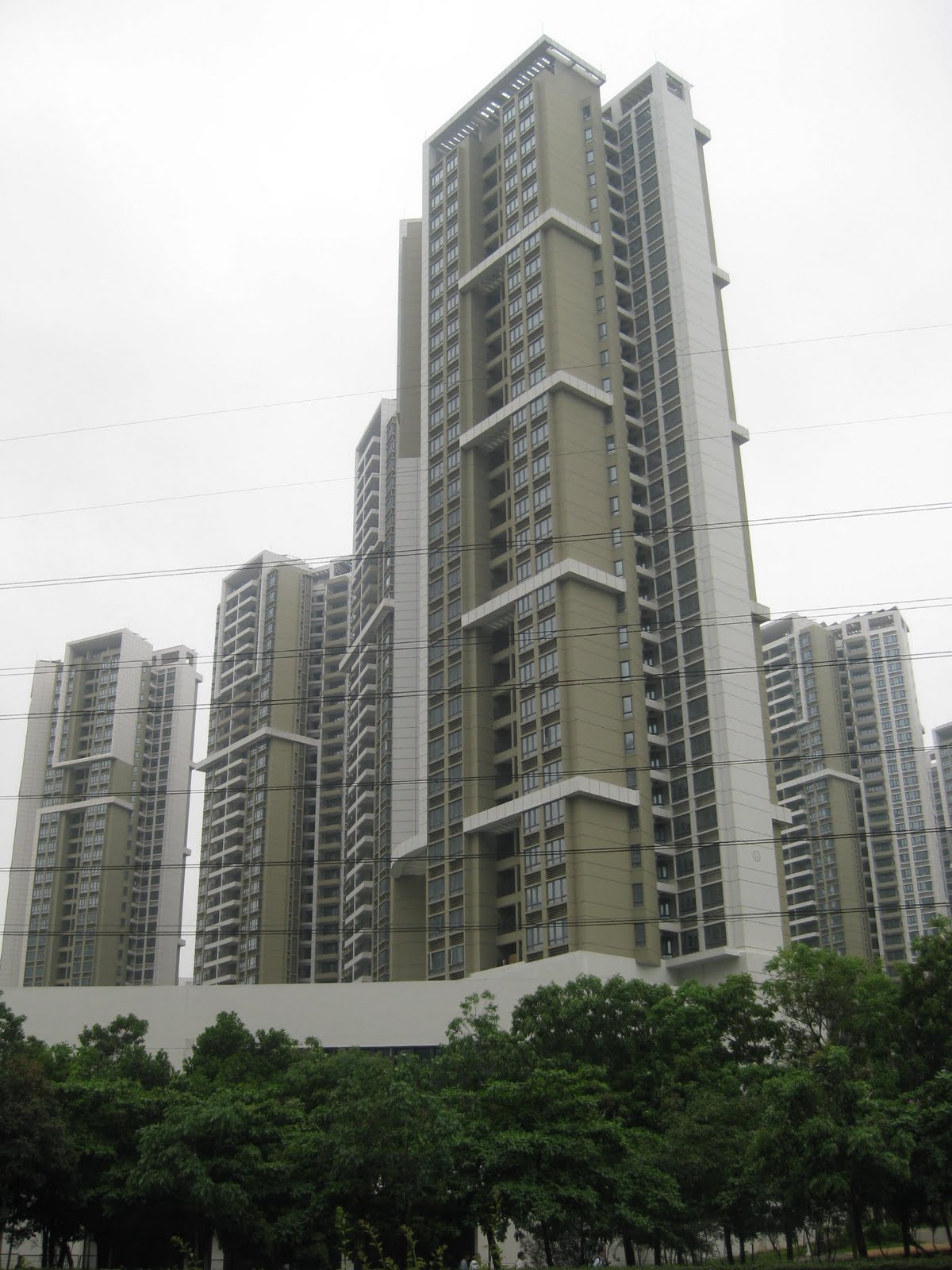
Beautiful apartment buildings and condos across from my uncle’s neighborhood. They have just been constructed and are empty at the moment. I’m pretty sure they will be filled in no time.


The Old

This morning we walked to a market to buy some produce and some steamed buns for breakfast. Farmers that are probably from just outside the city come here every morning by the roadside to sell their products. They are only allowed to be there until nine in the morning because officials are concerned with the aesthetics of the city. Markets are rather crowded, dirty, and smelly.

People were selling vegetables such as eggplants, cabbage, carrots, onions, and bok choy. There were also fruits, fresh meat, street food and eggs. Usually you can find the freshest and cheapest food here.


The Modern

Cars! Shenzhen on average has a wealthier population, at least in the district that we are in. Most of the cars are western brands such as Audi, Buick, Ford, and Mercedes-Benz. They are all very shiny and new. Even I, with extremely little knowledge about cars, could tell that the cars were expensive.

Tuesday, June 1, 2010

A Day on a Dairy Farm/Amusement Park

Today is Children’s Day! Kids in China get the day off of school so my uncle decided to take all of us to the largest dairy farm in Shenzhen. We went with another family. My uncle had gone to school with the mother and father. One thing I learned is that when you are with four little kids, three grandmothers, and a nanny, it takes forever to get anywhere. We planned on leaving in the morning but by the time we actually got there it was almost noon so we decided to eat first.

The restaurant we went to is owned by the farm and uses all its fresh products. We were seated in a special banquet room because there were so many of us.


The specialty was fresh yogurt and this type of roasted bird. I’m not sure what it is called in English but here they like to eat it chopped up and plated, with the head and all.


Chinese yogurt is so good! It is very different from what we eat in the US, as it has a very runny consistency, a sour and sweet taste, and is slurped through a straw.


With full stomachs, we headed to the farm. As we entered the main entrance, we were greeted by this huge statue of a cow.


There were so many animals! It was almost like a zoo. We saw the Tibetan Mastiff, a rare breed of dog that is apparently extremely aggressive. It was huge. There were also horses, dairy cows, deer, pigs, alligators, and fish. The farm makes a ton of money through selling visitors food to feed the animals. For example, we were able to feed milk to the cows, carrots to the deer, and greens to the pig. Each portion of food costs 5-10 yuan, or around a dollar.


Here I am feeding milk from a bottle to a very thirsty cow. I found this extremely ironic.


We also got to ride horses! I didn’t want to ride alone so I went with one of the trainers. He started making the horse gallop and I felt like I was going to fall off! I just gripped the handle of the saddle as tight as possible. I don’t think they treat the horses here very well though. There probably isn’t the same level of animal rights activism and legal protection. The trainers handled the horses very roughly and the poor animals were all branded.


As dinner time rolled around, we decided to eat out again. This time we went to another restaurant that belonged to the farm. Again, we ate the specialties of roasted bird and dairy. This time the dairy product was served in a hot ramekin. It was warm and had the consistency of thick yogurt but was extremely creamy and rich. It is a delicacy which is rather expensive because it is made from the milk of a cow right after it gives birth. It is supposed to be very nutritious and full of protein.

It’s strange that I’m actually eating more dairy here than I do back in the states, but I think the products here are much fresher. Yay for calcium! Maybe I will grow taller over the summer and surprise everyone back home when I return.