Showing posts with label Seoul. Show all posts

Sunday, December 21, 2014

Bukchon Hanok Village


The Bukchon area is a must-see if you are in Seoul. This is a traditional Hanok residential neighborhood, very much still lived-in, with lovely architecture, winding alleyways, surrounded by boutique shops and cafes. It's near the Anguk MRT station, and within walking distance of the major palaces.

The streets surrounding the neighborhood, down below, are full of interesting shops. You can see that at several points, stairways lead upwards from the main street towards the residential area.


There was an interesting looking vintage second-hand shop, with clothing displays leading up to the store. I wish I had time to take a look; secondhand stores always hold such treasures if you are willing to do a little bit of digging. 


Each alleyway offered its own surprises; family-owned restaurants, cool cafes, hand-made gifts stores. 


Finally we climbed upwards towards the residential area, which has a 600-year-old history. There was a nice view from the top, where we could see the nearby neighborhoods and rooftops sprawled out before us, with mountains in the distance.


The Bukchon Village alleys had many signs that cautioned visitors to be respectful and quiet, as families still do live in the homes. Some of the houses, though, had been converted into cultural centers, handicraft workshops, tea houses, and guesthouses.


There is somewhat of a walking path through the neighborhood, and various tourist maps and signs will point out where you are. Depending on how fast you walk, and whether or not you stop, I'd say you could go through the entire route in thirty minutes to one hour.


Even on this cold and snowy day, there were plenty of people walking up and down the main alleys. This little girl was fascinated by the snow.


Overall, it was such a lovely walk, and a great way to spend an afternoon seeing a different perspective of Seoul, usually pictured as a throbbing metropolis.


Gwangjang Night Market


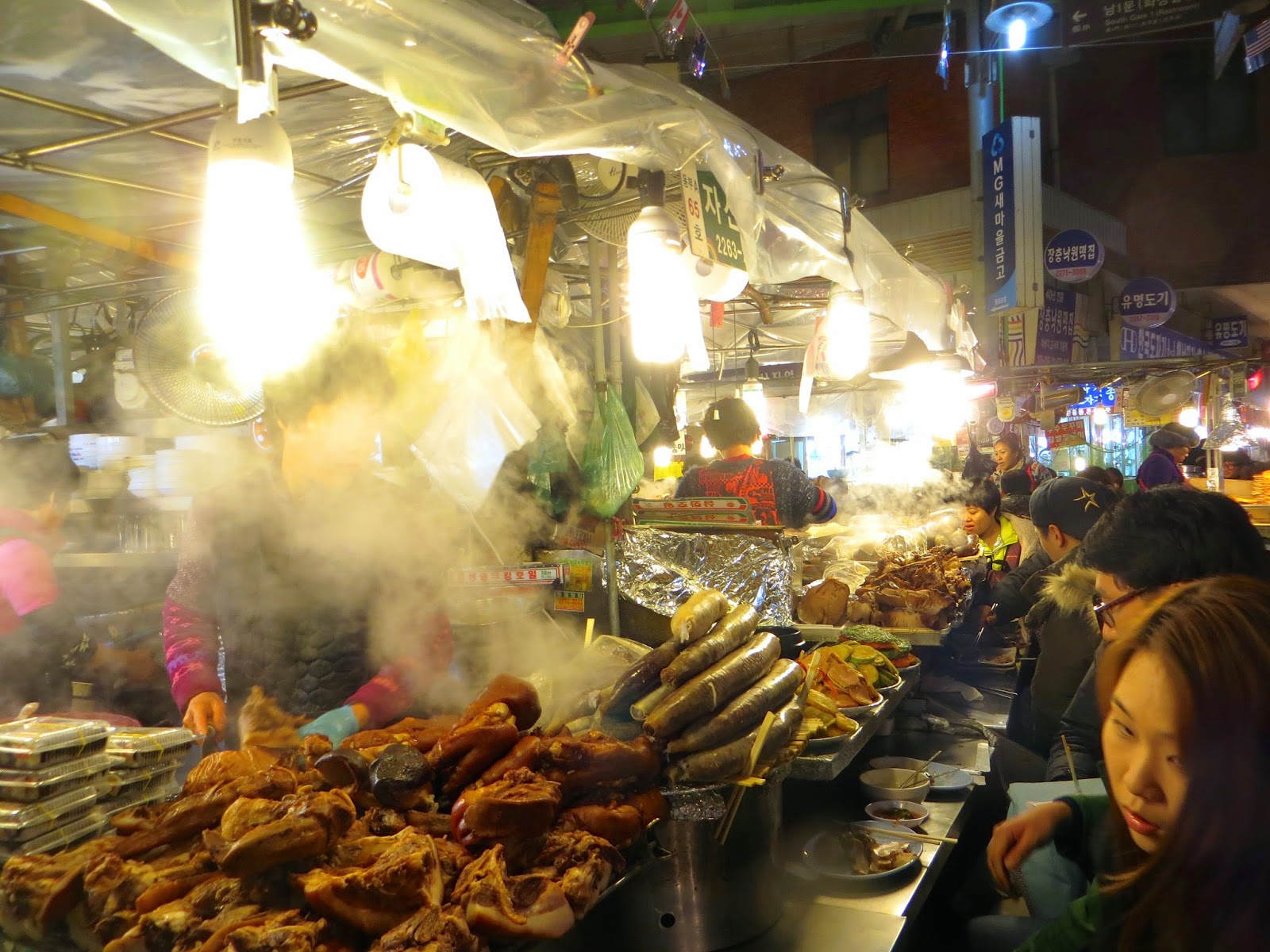
Gwangjang Market in Seoul offers a variety of traditional Korean street foods at night. Even on a cold evening, the covered arcade was bustling with both locals and tourists. There seems to be a few staple street foods on offer at Gwangjang.

One kind, which we did not try, is a type of big thick fried pancake, made with a flour or egg batter. It is filled with a variety of different foods like vegetables, meat, and seafood.


At Gwangjang, each shop has stools right on the street so people can sit, eat, and watch their food being cooked. There isn't as much grab-and-go as you'll find at a Taiwanese night market.


At an intersection within the market, the crowds were dense, and there were so many vendors placed together, creating a thick cloud of steam with their cooking. The whole place smelled delicious and was warmed up by the steam.


Some of the most popular vendors had all their seats filled, but so many places sell the same foods so you will have no trouble finding something to eat.


We found a slightly quieter and emptier part of the market, where a long line of vendors were all selling noodles and steamed Korean dumplings called mandu. We decided to go for some dumplings, which looked plump and fresh. The seats were heated, a nice touch on this wintry night.


There were two types of dumplings, meat and kimchi. One order of each was $5 USD, and the owner recommended that we split a plate of half of each kind of dumpling.


On the plate below, the rounded moon-like dumplings are pork, and the other kind is kimchi. They were really good! I especially liked the pork dumplings - thick and meaty.


We also decided to try a dish that sounds very strange but we saw lots of people eating - "sundae." It's a plate of various types of meats and offal, including pig stomach, liver, and intestines stuffed with glutinous rice. A big plate of this meat was $10 USD, and included some soup and side dishes.


It wasn't too bad! The meat had interesting textures. A whole plate of it would be too much for one person though, in my opinion.


There were also various traditional shops lining the arcade, though most of them appeared closed for the night. It was a fun night market experience, very different from the Taiwan night markets though. I would go back for the dumplings!

Saturday, December 20, 2014

Noryangjin Fisheries Market


There is a huge fisheries market in Seoul called Noryangjin Wholesale Fisheries Market. In this enormous indoor space, hundreds of small vendors sell fresh fish and other seafood, and there are restaurants lining the sides of the market that can cook up the food you buy, on the spot. 

Noryangjin is open all year and apparently 24 hours a day. The market is fairly easy to get to. It's in the southern part of Seoul, at a subway station conveniently named Noryangjin. Once you exit the station, you cross an overpass bridge which leads you to the market. 


You can peek over the railing on the second floor and see an overwhelming array of fresh seafood being sold.


There are all sorts of shellfish and mollusks...


...huge crabs and lobsters...


Salmon, tuna, and all other sorts of fish, freshly caught from the ocean. 


I'm not sure what this below creature is - some sort of stingray?


There are aisles upon aisles of fish. Be sure not to wear nice shoes to this market, as the ground is wet and slippery, and vendors butcher fish right on the spot.


As you walk down the aisles, you can start scouting out your next meal. Vendors sell fresh whole fish, prepared fish, as well as sashimi. There was so much delicious looking sashimi. 


The prices were very reasonable. A platter of sashimi like the ones pictured below were between $10-15 USD.


The best part of the experience is that you can buy some fresh fish from the market and bring it to one of the restaurants at the side of the market. Usually the restaurants will charge a cooking fee and a "table" fee. The cooking fee depends on what you want cooked, and what type of cooking style you want (steamed, BBQ'd, soup). The table fee is between $3-5 USD per person. 

Unfortunately, we bought a huge platter of salmon head and fillet that no restaurant seemed to want to deal with. The portion was just too big! We thought we had gotten a great deal ($10 USD for four to five pounds of fresh salmon), but we were waved away by most of the restaurants.

We wandered desperately among the restaurants, until we came across a hole-in-the-wall place on the first floor. This restaurant was decidedly less fancy than the others, but the nice owner agreed to cook our enormous portion of salmon for only $10 USD, and there was no table fee either.  


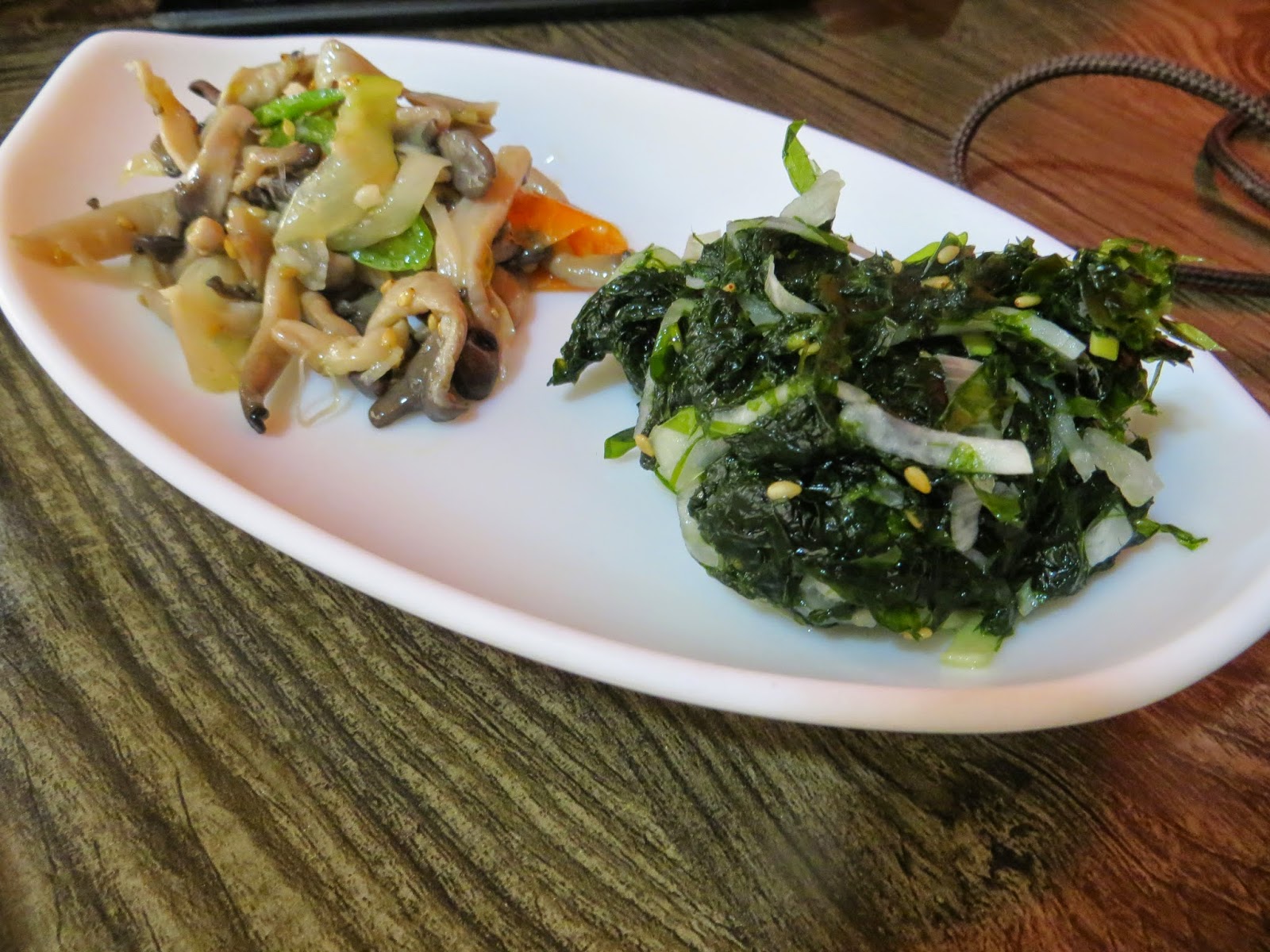
While our fresh salmon was being grilled in the kitchen, we enjoyed some nice pickled side dishes - some sort of greens and a mushroom dish.


In a short amount of time, our massive plate of salmon arrived. The cook apologetically told us that the fish head was still cooking, but we were just so happy to see our food on the table.


The fish was terrific - fresh, flakey, and lightly charred from the grill. It really did not need any extra seasoning.


Then the best part of the meal, the fish head, arrived. The massive head was split in half. The meat near the head is actually the best part, tender and juicy. I definitely got my fill of omega-3s at this meal.


Though we tried valiantly, we could not finish the huge portion. There was an old Korean couple next to us who took interest in us as tourists. They showed us an interesting dish that they were eating. The table had a hotpot, and we saw them take a live octopus that they had bought from the market, and put it directly into the boiling broth.


It was a little terrifying to see the wriggling legs of the octopus as it sank into the hot soup. The Korean lady was very insistent that we try this traditional dish, so she promptly cut up some of the octopus leg for us to try. It was quite chewy, but otherwise not bad! Since they were so gracious to share part of their meal with us, we offered them some of our salmon fillets. 

This was one of the best and most memorable meals I had in Seoul. Next time I will know not to buy such a big and unwieldy portion of salmon if I want to have an easier time getting my food cooked. 

Friday, December 19, 2014

All the Kimchi (and More)

It's no surprise to anyone that I absolutely love kimchi. I can make a complete meal out of this spicy, pickled Korean side dish. I was really excited to try all the different kinds of kimchi on this trip, and I can safely say that I have consumed enough kimchi on this trip to last several lifetimes. 

Kimchi is a traditional fermented dish, eaten at all Korean meals. It became a mainstay in the diet because the pickling process allowed the dish to be eaten throughout the winter season, providing people with the necessary vitamins. There are hundreds of varieties, made with different vegetables and seasonings. Most restaurants in Korea serve their own house-made kimchi.


Kimchi is usually served alongside a variety of other pickled side dishes. It's provided free of charge in addition to your entree. Each restaurant's kimchi tastes slightly different - some saltier, spicier, or more sour, others with more fish paste.


The most common kind is made with napa cabbage, though daikon radish, pictured below, is also quite common.


Apparently it's Korea's national dish.

I really enjoyed all the complimentary dishes served in addition to the main entree. They really help round out the meal, and allow you to taste a variety of flavors.


There is an exhibition at the Korean National Folk Museum about the process of making kimchi. I also saw advertisements for courses you can take to learn how to make it yourself.


Of course, I ate many other Korean foods during my trip. Before this trip, I only knew about bibimbap and kimchi, so it was quite an educational experience. 

Bibimbap is a favorite of mine. Rice, various vegetables, an egg, and sometimes meat are all cooked together in a sizzling stone pot. 


I also enjoyed many different hot stews, perfect for the chilly weather. The stews usually contained kimchi, tofu, sometimes meat, and other vegetables.


My friend took me to eat a very traditional dish called samgyetang, a whole young chicken stewed in a ginseng broth. The chicken is stuffed with glutinous rice, and the meat is savory and tender. Sunflower seeds sprinkled on top of the broth add a subtle nutty taste. This is the ultimate comfort food.


Even though South Korea is known to have a high cost of living, you can find cheaper meals if you go into the smaller alleys around the city and find small, family-owned restaurants. One day for lunch, we wandered into a tiny restaurant. The owners did not speak any English but they were really friendly. They served us this huge spread of food, including grilled mackerel, rice, soup, vegetables, and porridge. It was only $5 USD per person.


Conversely, the fancy and airy cafes that are located on nearly every street corner in Seoul can be pricey. These cafes, many of them open 24 hours a day, usually serve a western menu. This ham, egg, and cheese ciabatta sandwich was $5 USD. It was delicious, but pricey compared to the above lunch.


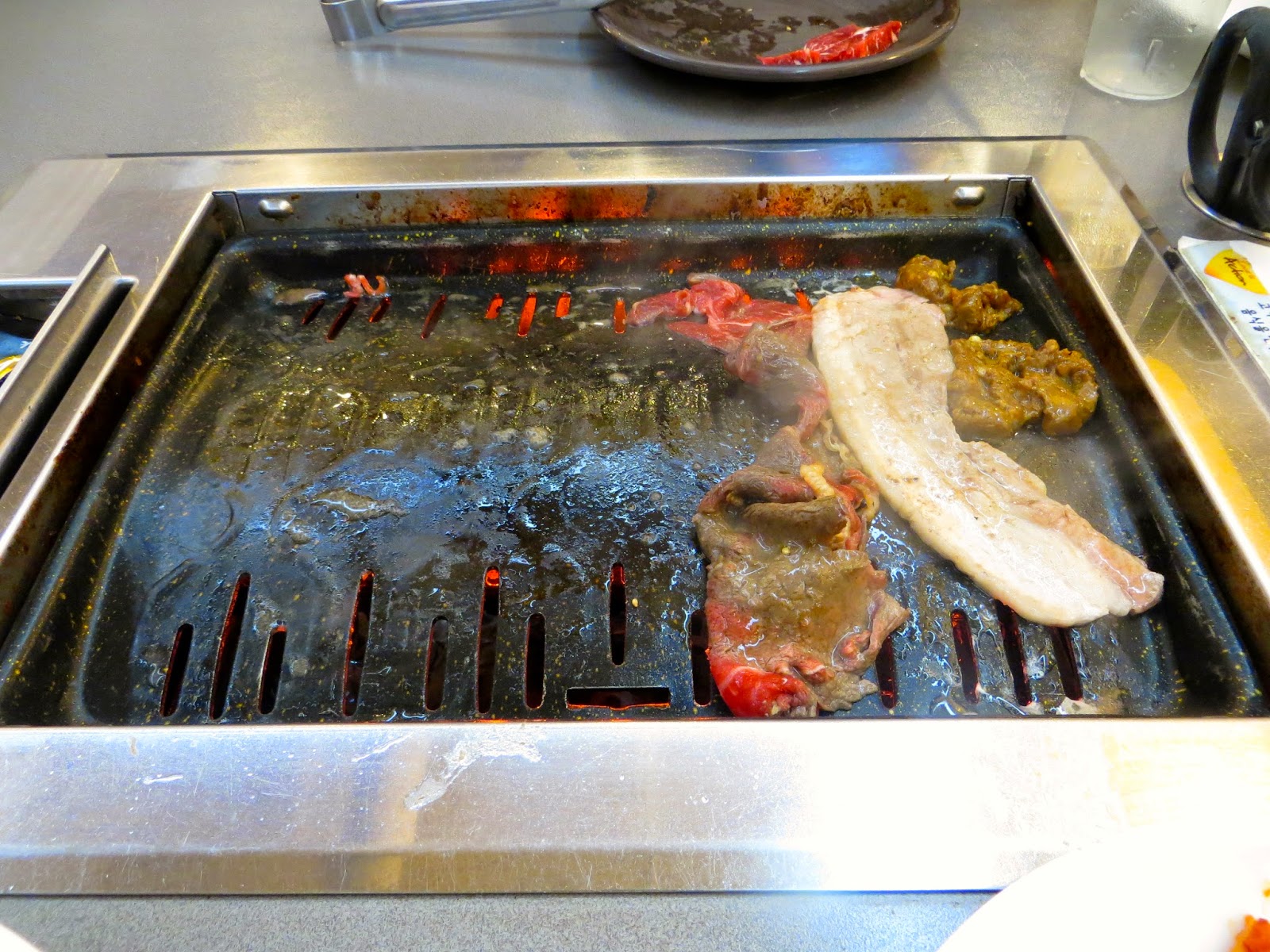
One popular experience in Korea is to eat at a BBQ buffet. There are many BBQ buffet chains, and the lower end ones cost $8-13 per person for all-you-can-eat, not a bad deal at all! Each table has a grill, and you go up to the front of the restaurant to load up on various raw meats, vegetables, and side dishes.


It's not a great photo, but below is how you cook the meat yourself. It's a really fun and filling experience.


The food was definitely one of the highlights of my trip to Seoul. In general, you can eat on a budget if you find the cheaper restaurants, for about $5-10 USD per entree. Happy eating! I thought I would get sick of kimchi, but I miss it already. Some of the souvenir shops at the airport actually sold pouches of fresh kimchi - I should have gotten some to bring back with me.