Thursday, October 2, 2014

Fushimi Inari


I just got back from six wonderful days in Kyoto, Japan, and I have so much to share with you! I fell in love with Japan after my first trip there earlier this year, and I had to go back, especially with the very affordable air tickets from Taipei. 

One of my favorite places I visited was the Fushimi Inari Shrine in the southern part of the city. It's the number one rated Kyoto attraction on TripAdvisor, and I must say it was not overrated at all as some tourist destinations tend to be. 

Fushimi Inari is the head shrine of Inari, the god of rice as well as the patron of business. It sits on a mountain, and is most well-known for its thousands of brilliant red torii gates that span 4 kilometers of paths up and down the mountain. If the photos look familiar, it might be because scenes of the movie Memoirs of a Geisha were filmed at this location. 


Fushimi-Inari is completely free, unlike many of Kyoto's other attractions. We started off at the base and slowly climbed up the mountain, enjoying the beautiful views. Near the bottom there were hordes of people on this sunny afternoon, but they started to thin out as we kept climbing upwards. 


The climb isn't too difficult. There are steps all the way up and multiple resting areas with snacks and bathrooms. The hardest part of the climb was finding the brief second when the background was clear of other tourists so we could take photos!


The rest areas were interesting and often had little shrines that we explored before moving on.


You can actually pay for your name or business to be printed on a torii gate. All these black inscriptions are of the name of the donor and the date of the donation. The costs starts at 400,000 yen for a small gate, which isn't too bad to be part of such a significant historical place. 


The climb is beautiful and takes about 2 hours to go up and then down, as the paths wind around the forested mountainside. However, don't expect a gorgeous view at the top - there's a lovely shrine but the views are blocked by trees so you won't get to see anything at a distance.

Fushimi-Inari is definitely worth dedicated a half-day in Kyoto, and I'm glad I got the opportunity to make a trip out there. It was a highlight of my visit!

Monday, September 22, 2014

Wufenpu and Raohe Night Market


Yesterday I decided to pay a visit to the Wufenpu Wholesale District. This area is comprised of blocks upon blocks of clothing wholesalers, selling everything from men's suits to fancy gowns and cute ribboned headbands. Stores are laid out like a market, and the little boutiques face open to the street. There is a dizzying array of goods, and seemingly endless alleys and turns that lead to evermore stores. If you really wanted to carefully shop and find the best deals, you might need at least an entire day to explore!


Wufenpu is located a few minutes walk away from the Houshanpi MRT station. You'll know it when you see it! It's not for the weak hearted. I started feeling almost dizzy after wandering the streets, with the limitless options, bright lights, trendy fashions, and welcoming storekeepers. The selection here is great, though I don't think the prices differ too much from your standard night market. Perhaps the deals are better if you are a wholesale buyer.


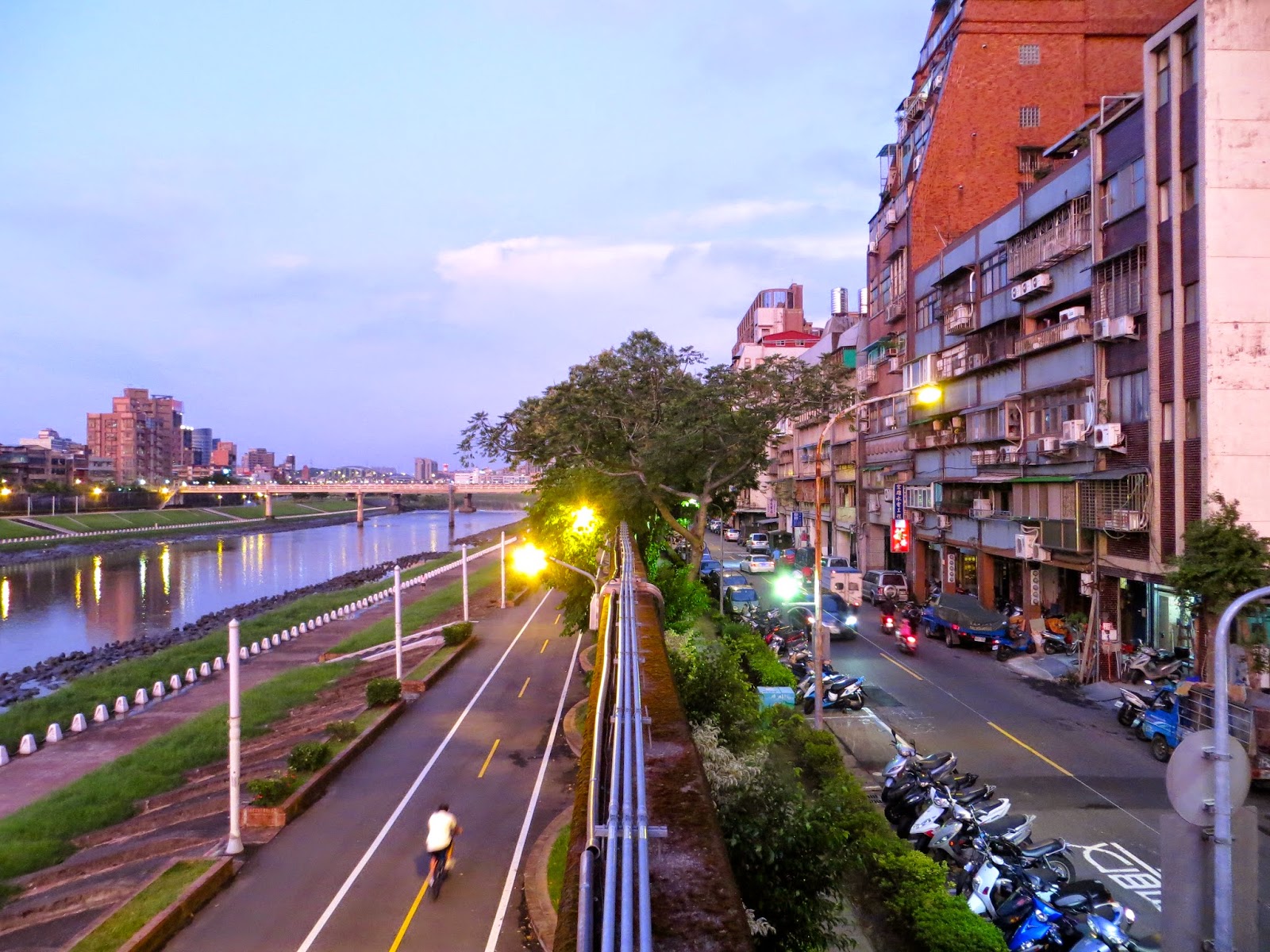
In order to get some fresh air, we wandered to a nearby riverside park by Keelung River. Taipei has a lot of great public parks, and they usually are well-maintained and popular with residents. There are basketball and tennis courts, benches, playgrounds, and bike lanes. In the cool of the early evening people were riding bikes and jogging alongside the water.


It was quite a picturesque place to watch the sunset, and we saw a few photographers setting up tripods near a bridge to patiently capture the gorgeous but fleeting view.


The parkway is thoughtfully separated from the main throughway by a high wall. This wall probably provides some soundproofing, and it also preserves the natural feel of the riverside from the feel of the busy city. You can see in the below photo the difference between the two sides of the wall.


After the sun set, we walked to the nearby Raohe Night Market to grab some food to eat. Raohe is especially famous for its panfried pork buns. They are toasty on the outside without being fried and oily. This vendor is right at the entrance of the market, near the large temple. There are usually long lines that have to be cordoned off with tape.


The pale buns sitting outside the large pan are uncooked, and the ones inside are ready to be served to the next lucky person in line.


Another interesting snack that we stumbled across were these little egg pancakes. Now, they look like the round pancakes that are normally sold on streets that contain red bean or peanut paste. However, these were special! They each contain an entire egg that is cracked into the middle of the pancake before it is capped during the cooking process.


I wish I managed to take a photo of the inside of the pancake. The egg yolks are a brilliant shade of orange, which means that the egg is really fresh and good quality. You could also add additional flavors like cheese and chocolate.


Lastly, we had dessert! This was an unplanned dessert - the best kind. We were walking out of the night market when we came across a girl handing out samples of snow ice. The sample was good enough that we decided to stop for a mango snow ice. We were confused by why this cafe was so empty - the desserts were fantastic!


The mango snow ice is a complex and layered dessert. At the bottom is a huge mound of snow ice (a light, milky, creamy version of ice cream. The snow ice is topped with fresh cubed mango, a scoop of rich vanilla ice cream, sugary cornflakes, and a biscuit. It was really fun to eat, and the size was made for sharing. This big bowl was $160 TWD (about 5 USD).


This was a fun little excursion - a little shopping, a little nature, and delicious food!

Thursday, September 18, 2014

Wulai Hot Springs

 
This past week I took a day trip to Wulai, a town nearby Taipei that is famous for its mountains and hot springs. The area is rural and mountainous, vastly different from the concrete of Taipei, but it's actually quite simple to get there. A straight bus from the Xindian MRT took a little more than half an hour.


When I got off the bus, there were signs that pointed to the Wulai Old Street. The streets were very quiet and peaceful on this weekday afternoon. Wulai is a little less well known than Jiufen and Danshui, but the emptiness lent its own charm to the place. 

Shops and restaurants lined the side of the street. They mostly sold traditional foods and snacks like wenquan (hot springs) eggs. The restaurants offered some local delicacies like wild boar meat and a fresh selection of stir-fried vegetables. There were also some strange fruits (baby pears?).


At the end of the Old Street you come across a bridge that spans the main river. The water from the hot springs flows down the mountain into this river. A lot of people bathe in the pockets of water along this river, as you will see from later in this post. 


After the bridge, you have the option of taking a small tram up towards the waterfall, another main attraction in the area. We decided to walk up to the waterfall and take the tram on the way back. The little town reminded me of Jiufen because of the little alleys and neighborhoods running up against the side of the mountain. We picked a path and followed it up onwards.

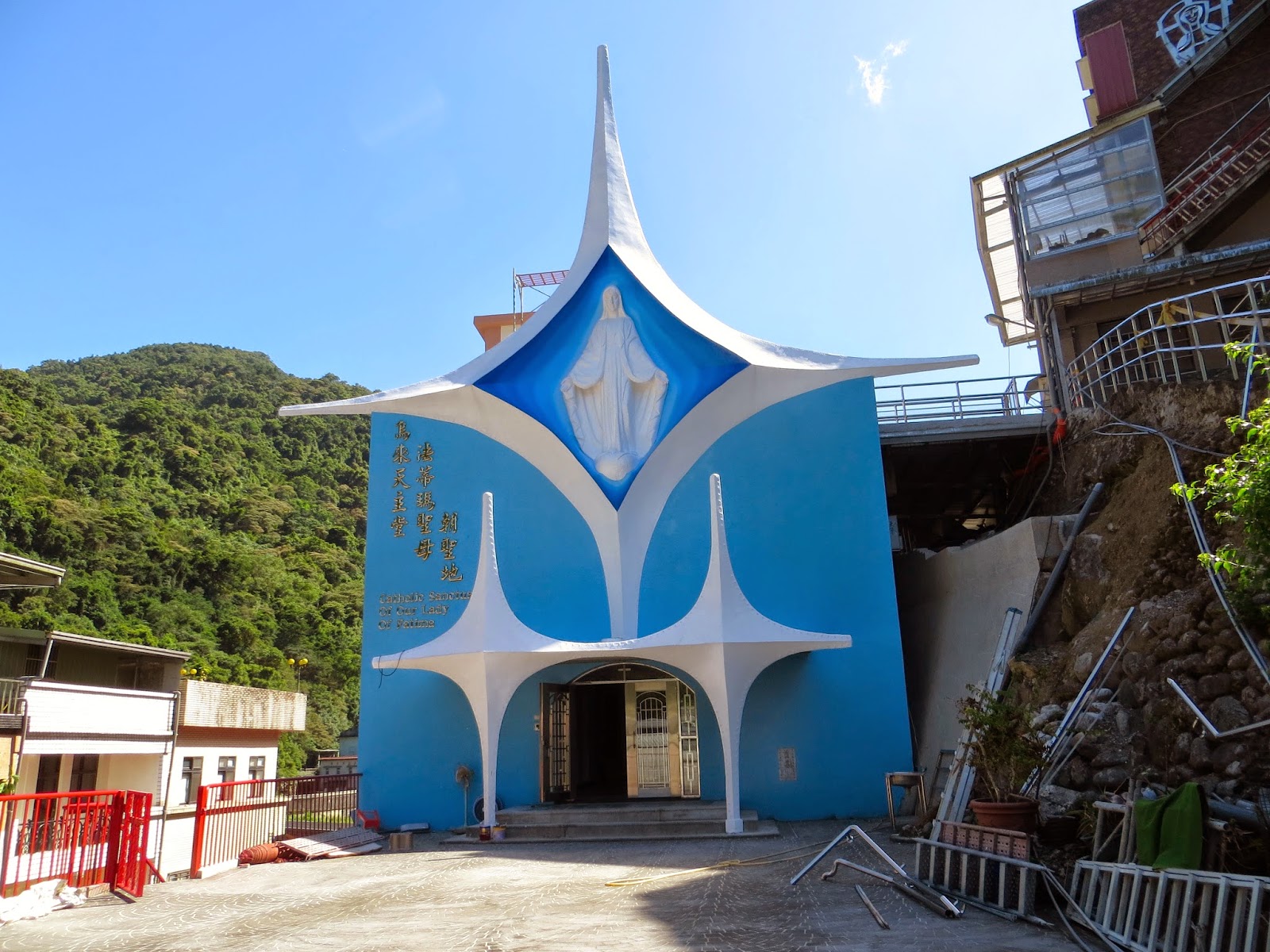
We saw a church of brilliant blue...


...tiny homes hidden from the main street...


Eventually we meandered onto a forested roadway that leads to the main waterfall, and we followed this path for about 1 km. It runs parallel to the tram tracks.


It was a really hot and humid day, so I kind of wished we had just taken the tram both ways! It's a very cute form of transportation. After a bit we made it to the end of the path at the waterfall. It's not too grand, but it's beautiful all the same!


You can take a rickety cable car from this area up to the mountain above the waterfall. It costs around $6USD. We decided to climb upwards on the mountain opposite the waterfall, since there were are few observation decks and a park there.

There were lots of steps and roads, all very well-maintained and paved, and we climbed up and up until we reached a nice little forested park with a lily pond. The area was so empty it appeared abandoned, but all of the facilities were in really good condition.


In late afternoon we climbed back down and took the little tram back to the main part of town for a little less than $2USD. It was a really fun and quick ride. Then we went down to the riverside for the hot springs experience! This is a public area so anyone can just go down and experience the water. Around the town, there are also many hotels that pipe the hot springs water into private hot tubs, if you would prefer that type of experience.


There were lots of people gathered around several stone pools that had been carved into the ground. Most of them were local people, middle-aged and older, enjoying a nice afternoon soak. They were friendly and encouraged us to dip our feet in, but wow was the water hot! It almost felt like it was boiling, and I couldn't even comfortably submerge one whole foot in the water.


There are a lot of health properties attributed to bathing in the hot springs water, which flows from the mountain and gathers into the little pools and stone tubs at the riverside. It's supposed to be really beneficial to your skin. The river itself is shallow but cold, and there were people making laps in the water, cooling off from soaking in the hot springs. 


The whole area had a fun sense of community. People were napping, relaxing, chatting, and swimming. At this time the sun was setting, and the rays lit up the valley. It was such a peaceful and beautiful time of day, so we decided to sit out on the rocks by the river and dip our feet into the cool running water, watching the people swim back and forth.  


In the early evening we headed back on the same bus back to Taipei. It was quite a fun and easy day trip, and I'm glad to know there is so much gorgeous nature in such close proximity to a big city. Perhaps I'll come back to Wulai again and be brave enough to actually experience the hot springs water. 

Tuesday, September 9, 2014

Tonghua Night Market

Tonghua Night Market is not one of the most well-known ones in Taipei. It has more of a local, neighborhood feel, even though it's in a really central location. This street full of shops and vendors is within a 10 minute walk of Liuzhangli MRT station, and Taipei 101 is close by. Tonghua Night Market is not too big, but it's still packed with unique foods to eat and things to buy.


As always, there is no shortage of interesting snacks you can buy as you stroll slowly down the street, taking in the sights and smells. 

Here's a ice cream wrap with peanut shavings. The peanut brittle comes in a huge block, and the vendor grinds off bits from the top to sprinkle on the wrap. Then he plops down three perfect scoops of ice cream. 


If you want to balance out your sugary ice cream, there are veggie vendors to be found! At the entrance to the night market, this man was selling fresh cut up veggies. 3 types of veggies cost 50 TWD, less than $2 USD. I picked broccoli, enoki mushrooms, and a cucumber. These veggies were cut up and seasoned with various spices, including a hefty dose of black pepper powder.


You can buy basically anything on a stick - chicken feet, mystery sausages and meat balls, organs, even rooster's comb! You know, the thing on top of its head. I tried it, and it was very rubbery and didn't really taste like anything.


All along the street are inexpensive shops selling all sorts of goods, from hardware to household items and clothing. Buy your stationary paper, sports bras, kitchen knives, and Hello Kitty water bottles all in one place! There are a few dollar stores. If you wander into one of these general stores you will be sure to find things you never even knew you needed, but hey, it's only a dollar right?


You can also buy huge prawns, or snails! Besides cart vendors, there were also quite a number of restaurants - western steak shops, sashimi bars - mostly around the 150-300 TWD range ($5-10).


It was really crowded! If you want a lively night market with less of a touristy vibe, then you should visit Tonghua. 


Saturday, August 30, 2014

Coffee Culture

Traditionally, Asians have always chosen tea as their caffeinated drink of choice, but it the past few years coffee has grown in popularity in the region, especially with younger people. I think it's both a social phenomenon as well as a change in taste preference. Coffee shops and cafes have become cool places to hang out and study, away from home and school. Students may also prefer coffee because of its extremely high caffeine content to help them keep up their energy (only black tea nears the amount of caffeine as black coffee).

Taipei has an extremely strong cafe culture. There are a few popular chains as well as many small boutique type cafes. In general, I would categorize the ways you can get your coffee into three four levels.

1. Convenience stores: $40-60 TWD ($1.50-2 USD)

By far the cheapest and fastest way to get a caffeine fix is to pop into the nearest 7/11 or Family Mart convenience store. There is usually one on every block, and you can order your drink at the cashier counter. There is a limited range of options, but usually you can find black coffee, cappuccinos, and lattes. There is the choice of iced or hot, and three sizes. The coffee is made with a machine, but the quality is decent, especially for the price. Some stores will have a little seating area but others do not, so be sure to check first if you want to sit down to enjoy your beverage. If you want a 24/7 option for coffee, this will do the trick.

2. Fast food places: ~ $60 TWD ($2 USD)

Many chains, like McDonald's or Mos Burger (from Japan) have "cafe" sections of their menu. The selections are basic but usually include the standard drinks. I think they actually use fresh milk though, unlike the convenience stores, so that's one step up in my opinion. Students will sometimes use the space for studying, though beware there is not always wi-fi.

3. Chain coffeeshops: $80-120 TWD (~$3-4 USD)

One step up from the fast food places are the chains. There are both western and local chains, and two of the most common are Starbucks and Dante Coffee. These are full-service coffee shops, with an extensive menu of drinks and food, and usually a good amount of seating. In Taipei, you have to register a Starbucks card in order to use their wi-fi.

4. Specialty cafes: $120-200 TWD ($4-6 USD)

Small home-grown cafes have proliferated in Taipei, especially in certain neighborhoods with lots of students or expats. These small businesses usually have distinctive character and a hipster vibe. Sometimes there is an extensive menu with foods for brunch or lunch, there is usually limited seating, and some of them take reservations. They are especially crowded during the expected hours (weekend afternoons) and be careful, some of them have a minimum spending per person. It's a pricey but relaxing way to spend a few hours!

The below latte was from "Hi Ryou Cafe" near NTNU. It had quite a fancy presentation, with a little bamboo mat, and the single coffee bean garnish.


They also had lovely cheesecakes! Light and fluffy, and not overwhelmingly sweet.


There are some coffee business that are outliers and don't really fit into any of the above categories. Some bakeries, like the Japanese Gaku-Den, sell a few drinks. There are some smaller chains that sell coffee but don't have any seating, like Cama Coffee. Sometimes the tea shops and milk tea places will also have a coffee drink or two. Regardless of your preferences, your caffeine needs are highly likely to be satisfied in Taipei!

I hope to be able to explore more of these little cafes, but I'll have to try not to splurge too much. $5 here and there doesn't seem too bad, but in Taipei that could be more than the cost of a filling meal! It's hard to justify that cost.